
Published June 2, 2026 · Reviewed by the Pro Needling editorial team
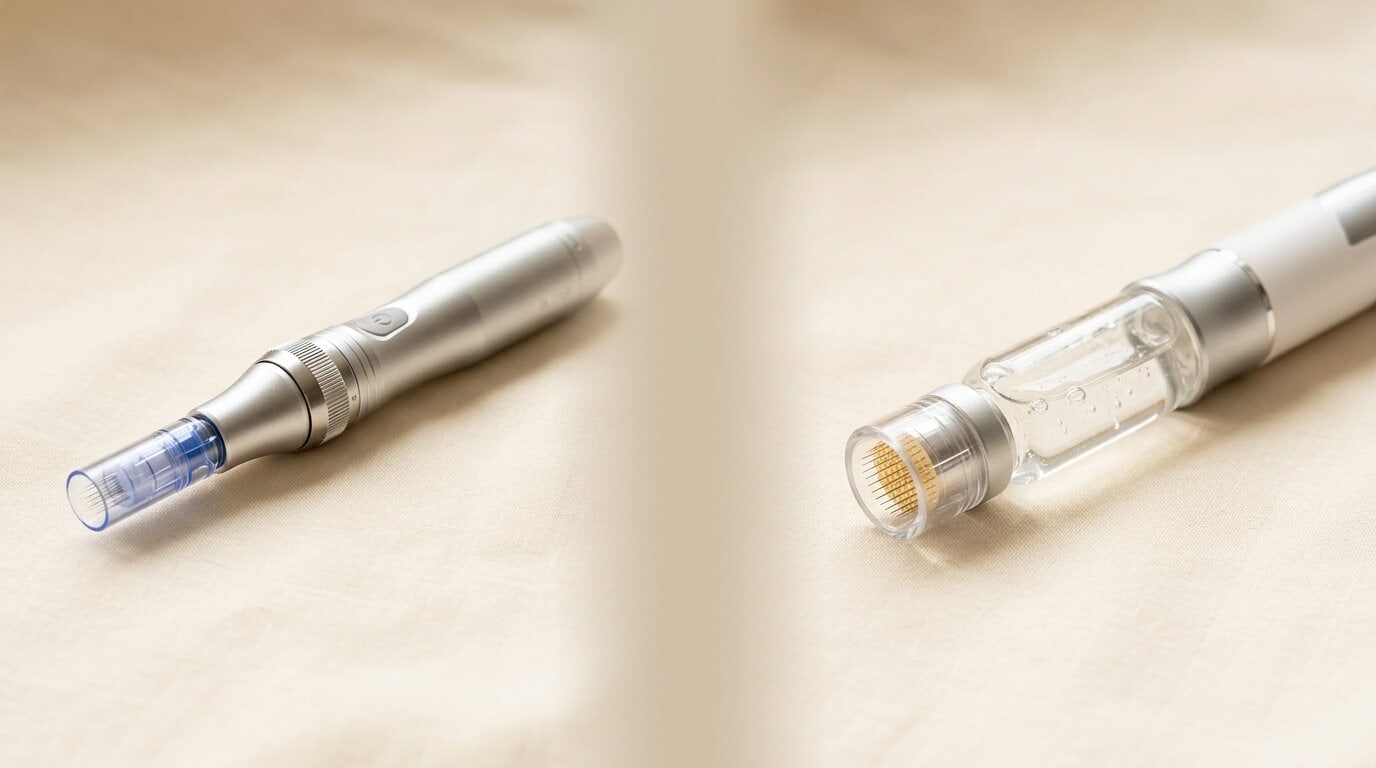
Microinfusion and microneedling both use tiny needles to deliver active ingredients into the skin, but they work differently and produce different results. Microinfusion drives serums directly into the dermis during treatment via a needle-and-reservoir device. Microneedling creates micro-channels first, then you apply serums after. This guide breaks down the differences, the use cases each one wins, and which one you should pick.
Quick answer:
- Microinfusion wins for: precision serum delivery (peptides, growth factors, hydration boosters), one-step treatments, faster results from active ingredients
- Microneedling wins for: collagen induction at depth, scar treatment, anti-aging at scale, lower per-session cost
- Both can be combined, many users do microneedling for collagen plus microinfusion for active delivery
Table of contents
- What is microinfusion?
- What is microneedling?
- Direct comparison table
- Which one should you choose?
- Can you combine both?
- FAQ
What is microinfusion?
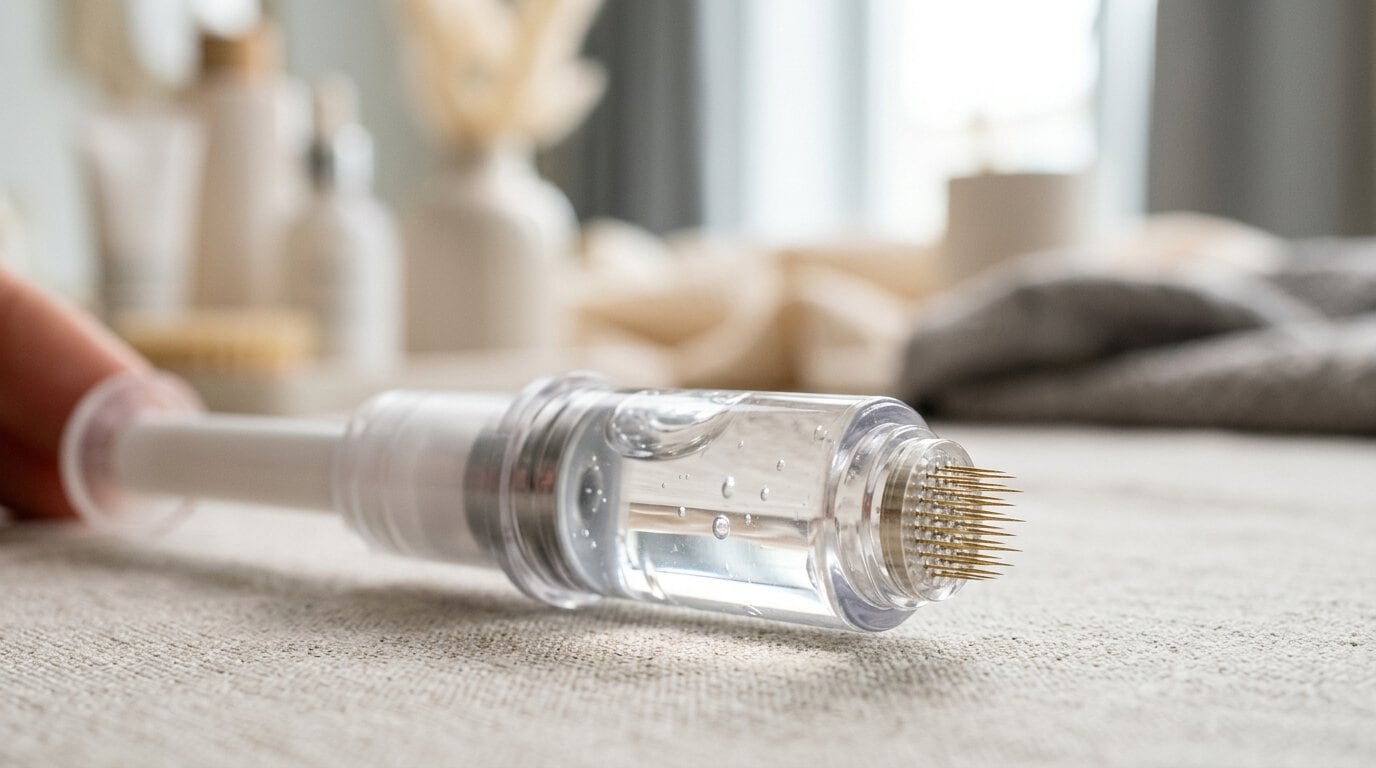
Microinfusion (also called “micro-infusion” or sometimes “micro-channeling with infusion”) is a treatment that combines tiny needles with simultaneous serum delivery. The device has a reservoir attached above the needles, as the needles puncture the skin, serum flows from the reservoir directly into the open channels.
The most popular at-home microinfusion device is the Hydra Pen H2/H3, which uses replaceable cartridges with a built-in serum well. Professional versions include the Aquagold Fine Touch system, which uses 24-karat gold-plated needles for in-clinic use.
Microinfusion is best for:
- Driving peptides, growth factors, or HA into the dermis precisely
- Targeted treatment of specific concerns (under-eye, lip enhancement, fine lines)
- Combination with active ingredients in a single step
- Faster results from individual serum applications
What is microneedling?
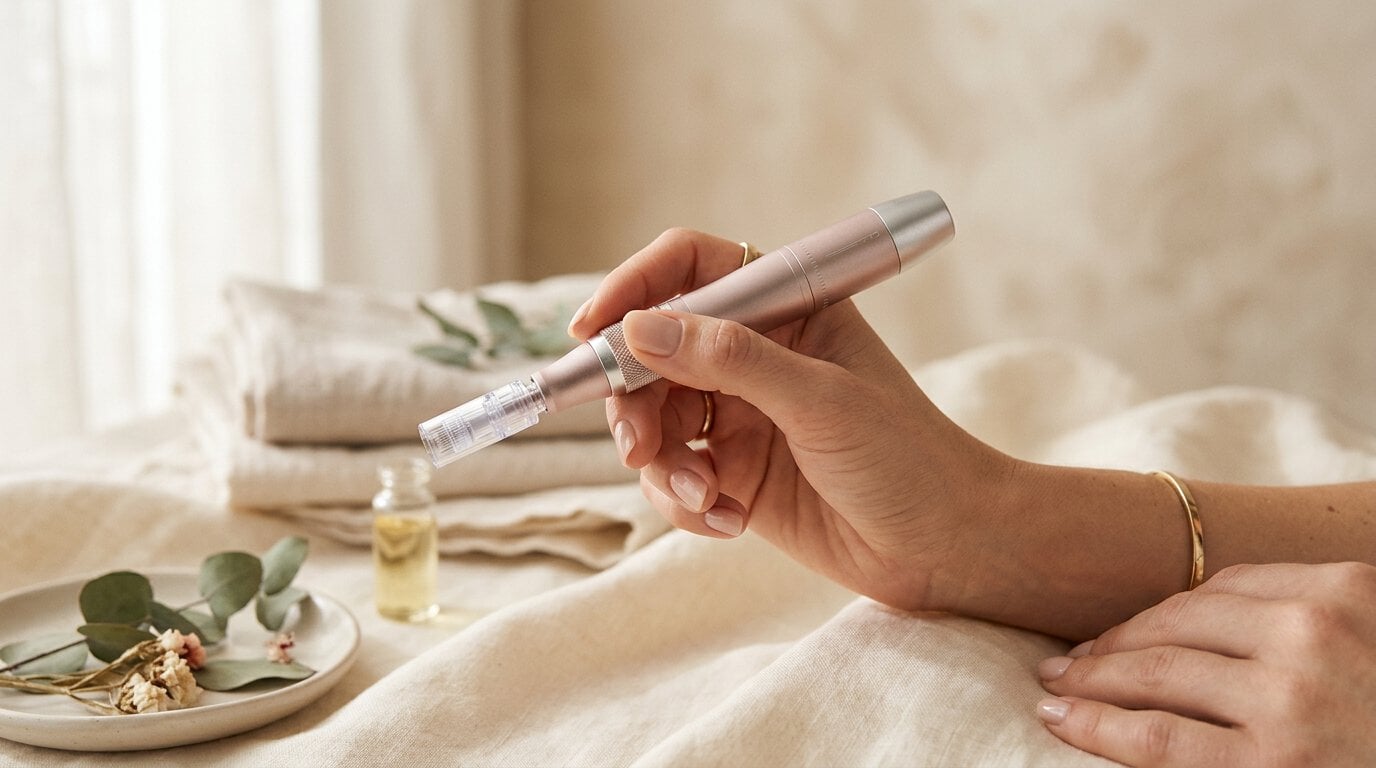
Microneedling (also called “collagen induction therapy”) uses oscillating needles to create thousands of micro-channels in the skin. The wound-healing response triggered by these controlled injuries leads to collagen and elastin synthesis over the following 4-8 weeks.
Serums are applied either during treatment (pure HA for glide) or after (peptides, growth factors, soothing botanicals). The needles don’t deliver the serum directly, they create the pathway through which topical product penetrates deeper.
Microneedling is best for:
- Collagen induction for fine lines and wrinkles
- Mild to moderate acne scarring
- Hyperpigmentation and tone evening
- Long-term anti-aging maintenance
- Treatment of larger surface areas (full face, neck, body)
For complete microneedling fundamentals, see our what is microneedling guide.
Direct comparison table
| Factor | Microinfusion | Microneedling |
|---|---|---|
| Primary mechanism | Serum delivery during puncture | Collagen induction via micro-injury |
| Typical depth | 0.5-1.5mm | 0.25-2.5mm (1.0mm max at home) |
| Treatment time per session | 10-20 minutes (smaller area focus) | 20-40 minutes (full face) |
| Best for | Targeted active delivery | Collagen building, broad coverage |
| Visible result timeline | Days (from active ingredient) | 4-8 weeks (from collagen synthesis) |
| At-home device example | Hydra Pen H2/H3 | Dr. Pen M8S |
| Professional version | Aquagold Fine Touch | SkinPen, Dermapen 4 |
| Cost per treatment (at-home) | $15-30 (cartridge + serum) | $3-8 (cartridge) |
| Cost per treatment (professional) | $300-700 | $200-500 |
| Recovery time | 1-2 days (mild redness) | 3-5 days (depth dependent) |
| Frequency | Every 3-4 weeks | Every 2-6 weeks (depth dependent) |
Which one should you choose?
Choose microinfusion if:
- You have specific active ingredients you want to drive deeper (peptides, growth factors, brightening agents)
- You’re treating targeted areas (under-eye, lip enhancement, specific fine lines)
- You want faster visible results from individual treatments
- You’re willing to pay more per session for the serum reservoir cost
- You’re combining with other treatments and want precision delivery
Choose microneedling if:
- You want long-term collagen building for anti-aging
- You’re treating larger areas (full face, neck, body)
- You’re addressing acne scars or hyperpigmentation
- You want lower per-session cost
- You’re committed to a 3-6 month treatment program for visible results
Can you combine microneedling and microinfusion?
Yes, and many advanced users do. A common protocol:
- Microneedling session (Dr. Pen at 0.5-1.0mm) for full-face collagen induction.
- Apply hyaluronic acid during treatment for glide and immediate hydration.
- 2-3 weeks later: Microinfusion session with peptide or growth factor serum on targeted areas (under-eyes, lip area, fine lines).
- Continue alternating on 2-3 week cycles.
This combination leverages both mechanisms, microneedling for broad-area collagen building, microinfusion for precision active delivery to specific concerns. Don’t do both treatments in the same session, the skin needs time to recover between procedures.
If you’re newer to needle-based treatments, start with microneedling alone for 2-3 months to learn the routine before adding microinfusion. The complexity adds up quickly.
FAQ
What’s the difference between microneedling and microinfusion?
Microneedling creates micro-channels with oscillating needles, triggering collagen synthesis over 4-8 weeks. Microinfusion uses needles with an attached serum reservoir to drive active ingredients directly into the dermis during treatment. Microneedling is for collagen building; microinfusion is for precise serum delivery.
Which is better, microinfusion or microneedling?
Neither is universally better, they solve different problems. Microneedling is better for long-term anti-aging, acne scarring, and broad-area treatment. Microinfusion is better for targeted active delivery, faster results from specific serums, and precision treatment of localized concerns.
Can I do microinfusion at home?
Yes, the Hydra Pen H2/H3 is the leading at-home microinfusion device. Cartridges include a built-in serum reservoir. Results depend on which serum you load. Hyaluronic acid is the safest, most-recommended starting point. Avoid loading active acids, retinoids, or vitamin C, those should never be driven directly into open channels.
Is microinfusion safe?
When done with sterile cartridges and appropriate serums, yes. The same safety principles apply as microneedling: never reuse cartridges, only use serums labeled safe for microinfusion (or pure hyaluronic acid), don’t exceed safe depths for at-home use (1.5mm maximum), and follow proper aftercare protocols.
How often should I do microinfusion vs microneedling?
Microinfusion: every 3-4 weeks. Microneedling: every 2-6 weeks depending on depth (every 2 weeks for 0.5mm, every 3-4 weeks for 1.0mm). If combining both, alternate on 2-3 week cycles.
What serums work best with microinfusion?
Pure hyaluronic acid is the safest universal starting point. Peptide complexes (Multi-Peptide, Matrixyl) work well for anti-aging. Growth factors (EGF) work for advanced anti-aging and scar treatment. Avoid retinoids, AHAs, BHAs, vitamin C, or any active that you wouldn’t apply to broken skin.
Is the Hydra Pen the same as a microneedling pen?
No. The Hydra Pen is specifically a microinfusion device with a serum reservoir in the cartridge. Standard microneedling pens (Dr. Pen, SkinPen, Dermapen) have no serum reservoir, they only create the channels.
Summary
Microneedling and microinfusion are complementary, not competing, treatments. Microneedling drives collagen synthesis for long-term skin remodeling. Microinfusion delivers active serums directly to the dermis for faster, targeted results. Most users will start with microneedling alone and consider adding microinfusion after 2-3 months of routine experience.
For complete guidance on each treatment, see our microneedling fundamentals guide, microneedling pen reviews, depth chart, and hyaluronic acid serum picks.

Kathy is a certified nutrition & health coach, long-time model, and lifelong skincare devotee. After years in the fashion industry, where your skin is your business card, she went deep on what actually works and founded ProNeedling. She tests the tools, treatments, and products we cover.