
Published June 2, 2026 · Reviewed by the Pro Needling editorial team
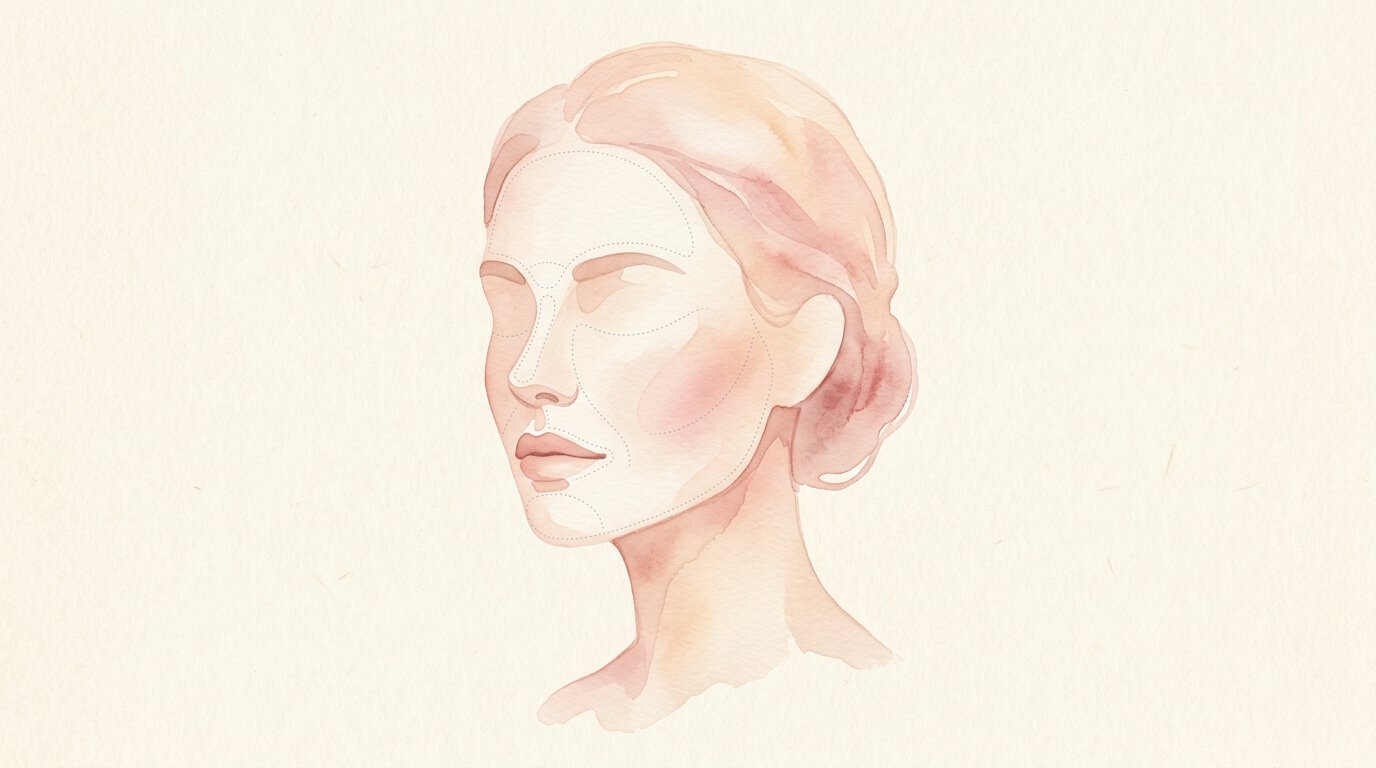
Where acne appears on your face often hints at what’s causing it. The traditional Chinese medicine practice of face mapping ties zones of the face to specific underlying issues, hormonal, dietary, stress, or organ health. Modern dermatology mostly disagrees on the organ connections but agrees that breakout patterns can reveal real triggers. This guide combines both lenses with treatment options that address root causes, not just surface acne.
Quick zones:
- Forehead: Stress, sleep disruption, hair product transfer
- Between eyebrows: Liver / alcohol / heavy meals
- Cheeks: Bacteria from phones, pillows; respiratory issues; sugar intake
- Nose: Excess sebum; cardiovascular / circulation patterns
- Around mouth + chin: Hormonal patterns, especially menstrual cycle
- Jawline: Hormonal patterns, especially androgens
Table of contents
- What is face mapping?
- Acne face map by zone
- Underlying causes by zone
- Treatment by zone
- How microneedling addresses scarring from face-mapped acne
- FAQ
What is face mapping?
Face mapping originates in traditional Chinese medicine (TCM) and Ayurvedic skincare practices that connect facial zones to organ systems. The modern dermatology version focuses on the more validated patterns: hormonal, hygiene, stress, and dietary triggers that produce predictable breakout patterns.
The science is mixed. Internal organ connections (e.g., “chin breakouts = kidney issues”) aren’t supported by Western medical research. But the broader patterns, that hormonal acne tends to appear on jawline and chin, that bacterial breakouts cluster on cheeks where phones and pillows make contact, those are well-documented.
Use face mapping as a starting hypothesis for what might be driving breakouts, then confirm or rule out with elimination testing.
Acne face map by zone
| Zone | Common triggers | Acne type |
|---|---|---|
| Forehead | Stress, sleep, hair products, hats | Small whiteheads, congested texture |
| Between eyebrows | Diet (alcohol, heavy meals), poor sleep | Persistent pimples, blackheads |
| Temples | Hair products, sunscreen residue | Whiteheads, congestion |
| Cheeks | Phone contact, pillowcase bacteria, sugar, lung issues | Inflammatory pimples, cystic flares |
| Nose | Excess sebum, cardiovascular patterns | Blackheads, sebaceous filaments |
| Around mouth | Toothpaste irritants, lipstick, hormonal | Perioral dermatitis, pimples |
| Chin | Hormonal (menstrual cycle), digestion | Cystic acne, painful deep bumps |
| Jawline | Androgens, hormonal birth control changes | Cystic acne, recurring breakouts |
| Neck | Hormonal, hair products, fabric softeners | Inflammatory pimples |
Underlying causes by zone
Forehead breakouts
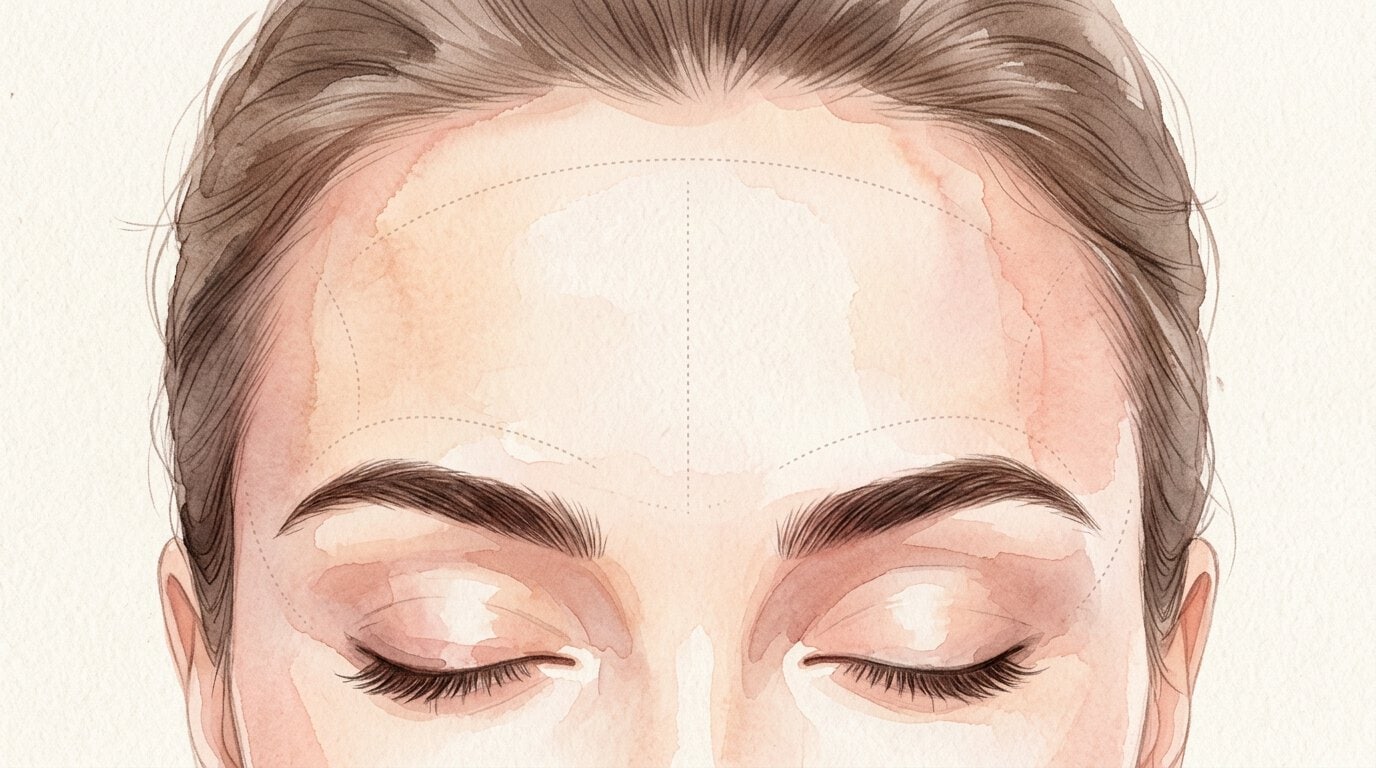
Most common cause: hair products (oils, leave-in conditioners, dry shampoos) transferring to the forehead. Secondary: stress-related cortisol increases driving sebum production. Tertiary: hats, headbands, or helmets creating friction and trapping bacteria.
Fix: Cleanse hairline thoroughly after applying hair products. Wash hats and headbands weekly. Manage stress with consistent sleep schedule.
Between eyebrows + temples
Diet-related: alcohol intake, heavy or rich meals, dehydration. The TCM connection here is “liver”, Western medicine doesn’t validate the organ connection, but does validate that alcohol and processed food impact skin via inflammation pathways.
Fix: Reduce alcohol intake. Cleanse area after applying sunscreen or hair products. Hydrate (water + electrolytes).
Cheek breakouts
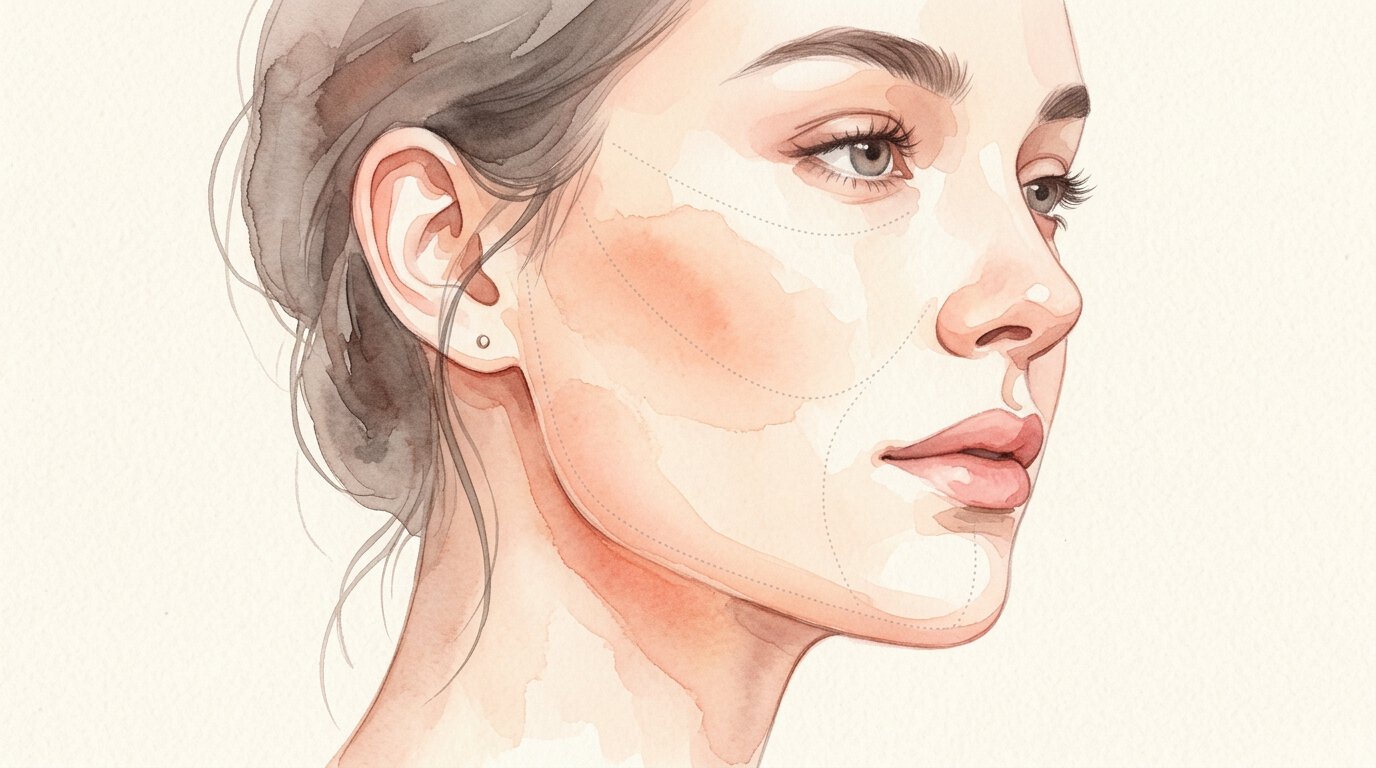
Bacterial transfer is #1: phones held against cheek during calls, pillowcases not washed weekly, makeup brushes not cleaned regularly. Secondary: respiratory issues (allergies, asthma) can correlate with cheek breakouts. Tertiary: dairy and sugar intake.
Fix: Sanitize phone daily. Change pillowcase 2x weekly. Wash makeup brushes weekly. Use speakerphone or earbuds for long calls.
Nose breakouts
Sebaceous filaments are the most common, small black dots in pores, not actually acne but commonly mistaken for it. True nose acne is often related to excess sebum production, hormonal patterns, and (less validated) cardiovascular circulation.
Fix: Salicylic acid 2-3x weekly (skip if microneedling recently). Niacinamide serum daily. Don’t squeeze sebaceous filaments, they refill.
Around mouth (perioral)
Often perioral dermatitis rather than true acne, a rash caused by toothpaste irritants (especially fluoride or SLS), lipstick ingredients, or steroid creams used elsewhere on the face. Hormonal acne can also concentrate here.
Fix: Switch to fluoride-free toothpaste for 4-6 weeks to test. Avoid heavy lip products. If perioral dermatitis, see dermatologist for short antibiotic course.
Chin and jawline breakouts
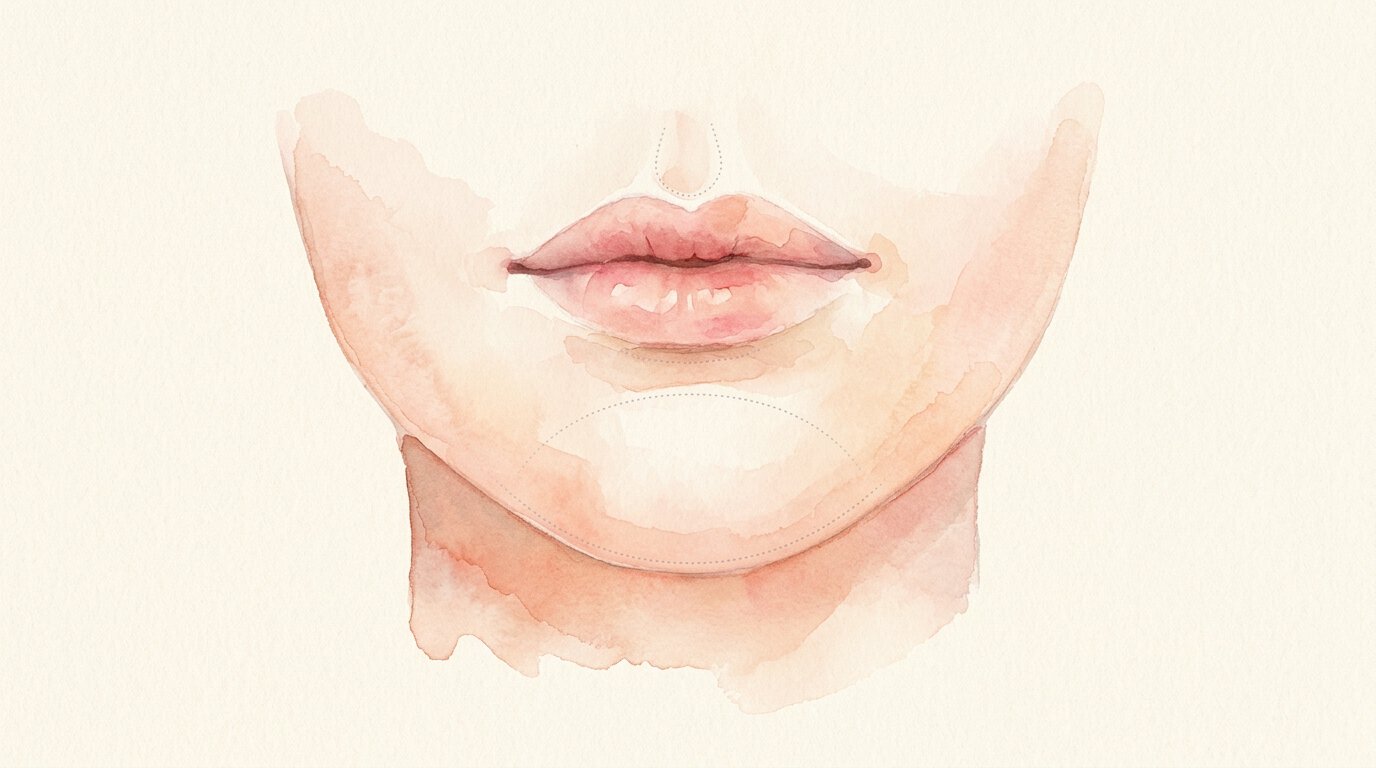
The hormonal acne zone. Strongly correlated with menstrual cycle, hormonal birth control changes, PCOS, perimenopause, and androgen excess. Stress amplifies. Diet (dairy especially) can worsen.
Fix: Cycle-aware skincare. Hormonal birth control consultation if recurring. Dairy elimination trial (4-6 weeks). Spironolactone if severe (prescription).
Treatment by zone
The right treatment depends on what’s driving the breakout, not just where it is:
- Hairline / forehead: Better hair product choices, weekly hat cleaning, salicylic acid spot treatment
- Cheeks: Phone sanitization, pillowcase rotation, gentle exfoliation
- Nose: Salicylic acid, niacinamide, pore strips sparingly
- Chin / jawline (hormonal): Consistent skincare, potential birth control consultation, microneedling for resulting scars (see below)
- Around mouth: Identify and remove irritants (toothpaste, lip products), prescription treatment for true perioral dermatitis
For all zones: gentle cleansing 2x daily, non-comedogenic moisturizer, mineral sunscreen daily.
How microneedling addresses scarring from face-mapped acne
Face-mapped acne, particularly cystic acne on chin and jawline, frequently leaves scars after healing. Microneedling is one of the most effective treatments for the resulting:
- Rolling scars (shallow waves in the skin)
- Boxcar scars (sharp-edged depressions)
- Atrophic scars (deeper, more depressed scars)
- Post-inflammatory hyperpigmentation (dark spots remaining after acne resolves)
For most acne scars, at-home microneedling at 0.5-1.0mm every 3-4 weeks for 6 months produces meaningful improvement. For deep scars (boxcar, ice pick), professional microneedling at 1.5-2.5mm depth is required.
See our microneedling for acne scars guide for complete protocol, and microneedling pen reviews for device recommendations.
FAQ
What does acne on different parts of your face mean?
Forehead acne often signals stress, hair product transfer, or hat friction. Cheek acne typically points to bacterial transfer (phones, pillowcases) or diet. Chin and jawline acne are usually hormonal. Around mouth (perioral) is often toothpaste or lip product irritation. Use these as starting hypotheses, not certainties.
Is face mapping for acne real?
The general patterns (hormonal acne on chin, bacterial on cheeks, stress on forehead) have research support. The traditional Chinese medicine organ connections (chin = kidneys, forehead = bladder) lack Western medical validation. Use face mapping as starting hypothesis, then test with elimination of suspected triggers.
How do I treat hormonal acne on my chin?
Consistent gentle skincare, hormonal birth control consultation if recurring, dairy elimination trial (4-6 weeks), and spironolactone (prescription) for severe cases. For scarring resulting from cystic chin acne, microneedling at 0.5-1.0mm depth every 3-4 weeks for 6 months produces meaningful improvement.
Why do I keep getting acne on my cheeks?
Bacterial transfer is the most common cause, your phone, pillowcase, and makeup brushes accumulate bacteria that transfer to cheeks. Sanitize phone daily, change pillowcase 2x weekly, wash makeup brushes weekly. If breakouts persist, consider dietary triggers (dairy, sugar) and respiratory issues.
Can microneedling help with acne scars from face-mapped acne?
Yes. Microneedling triggers collagen synthesis to remodel scar tissue. Most effective for rolling and boxcar scars. At-home microneedling at 0.5-1.0mm depth every 3-4 weeks for 6 months produces meaningful improvement on mild to moderate scars. Deep scars require professional treatment at 1.5-2.5mm depth.
How do I prevent forehead breakouts?
Cleanse hairline thoroughly after applying hair products (oils, leave-ins, dry shampoos). Wash hats, headbands, and helmets weekly. Manage stress with consistent sleep. Spot-treat with salicylic acid 2-3x weekly if breakouts persist.
Summary
Face mapping provides useful starting hypotheses for what’s driving acne in specific zones, but treat it as a starting point rather than diagnosis. The validated patterns, bacterial transfer to cheeks, hormonal patterns on chin and jawline, stress on forehead, give you specific actions to test. Internal organ connections from traditional Chinese medicine aren’t supported by Western research but don’t undermine the basic principle that breakout patterns reveal triggers.
For scarring resulting from face-mapped acne, microneedling is the most effective at-home treatment. See our microneedling for acne scars guide, pen reviews, depth chart, and post-treatment breakout management.

Kathy is a certified nutrition & health coach, long-time model, and lifelong skincare devotee. After years in the fashion industry, where your skin is your business card, she went deep on what actually works and founded ProNeedling. She tests the tools, treatments, and products we cover.