
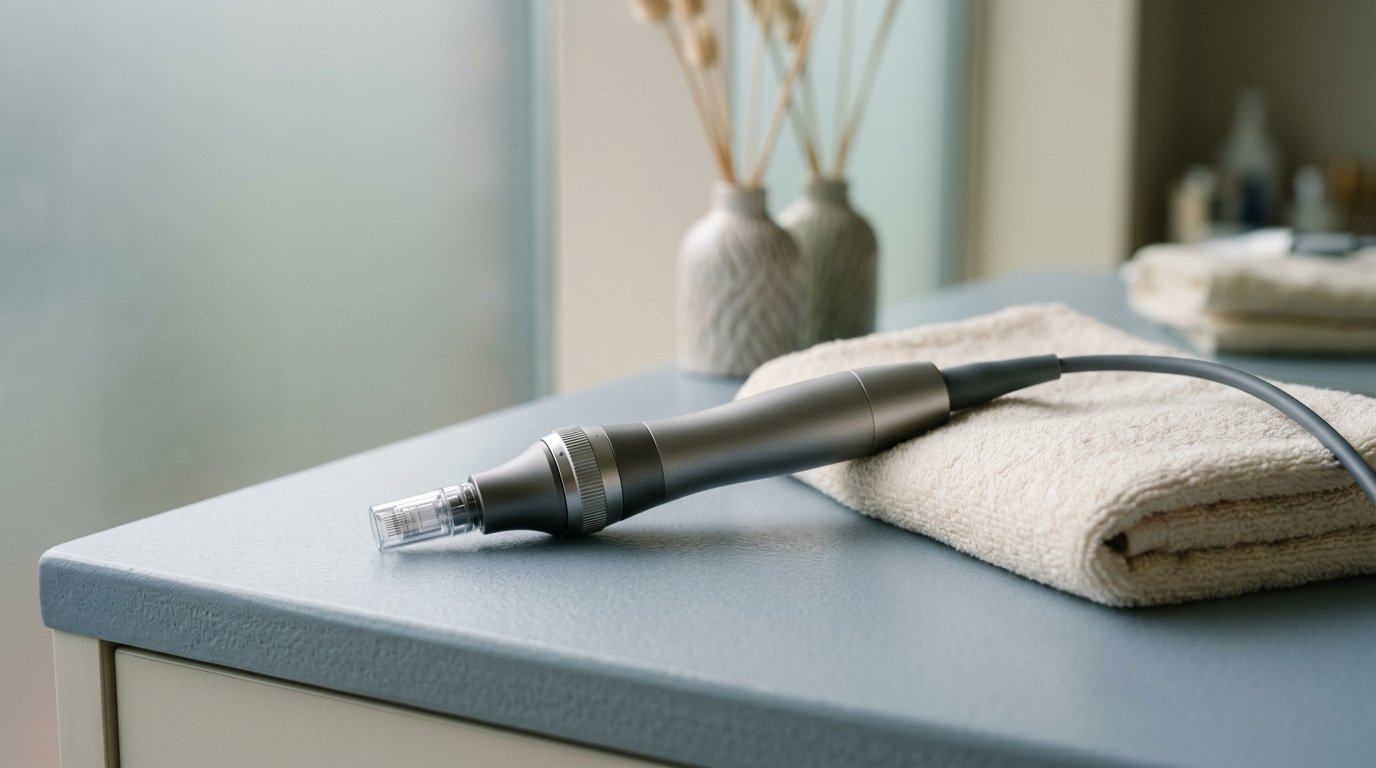
Radiofrequency (RF) microneedling and Morpheus8 add heat and deeper energy to standard microneedling, so they carry extra risks and contraindications. A thorough RF microneedling consent form protects your clients, your practice, and your insurance position. Below is a free template you can copy and adapt, plus the complete kit.
By the ProNeedling editorial team · Updated August 2026
What an RF microneedling consent form must include
- RF procedure description and realistic expectations (gradual tightening; a series is usually needed)
- RF-specific risks: burns/blistering, pigmentation change (higher in deeper skin tones), nerve injury, scarring
- RF-specific contraindications: pacemakers/implanted electronic devices, metal implants, cardiac conditions
- Anesthesia disclosure (lidocaine/tetracaine allergy)
- Elective, non-refundable, no-guarantee statements
- Signature, date, and photo/records consent
Free RF microneedling & Morpheus8 consent form template
Copy, print, or adapt the template below. For the editable version plus the other five forms every RF practice needs, see the full kit.
Download the RF microneedling consent form PDF
One page, print-ready, free. No email required.
Download the free consent form (PDF)
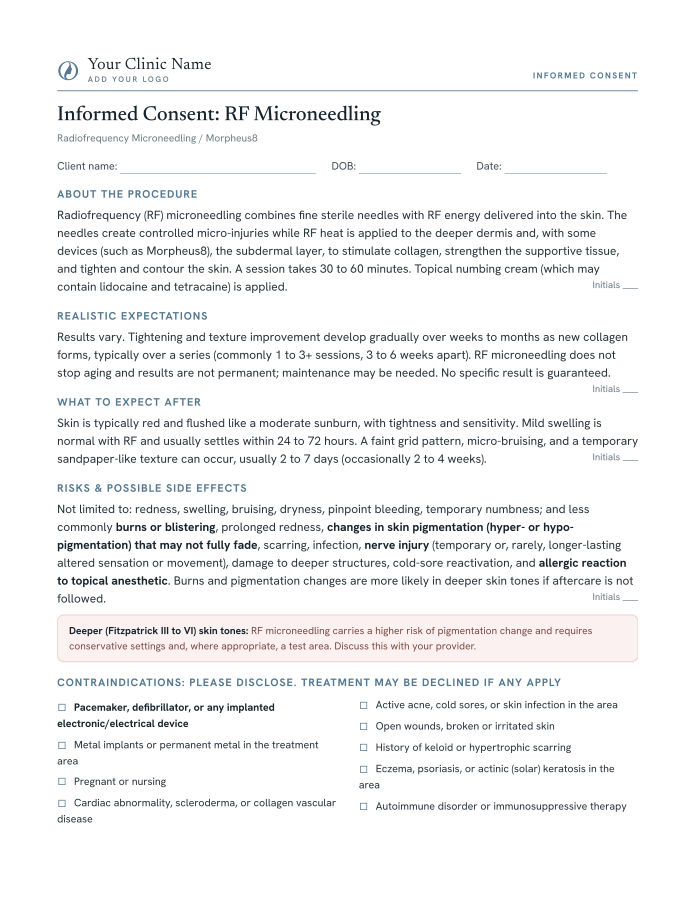
Informed Consent: RF Microneedling / Morpheus8
Client name: __________ DOB: ________ Date: ________
About the procedure. RF microneedling combines fine sterile needles with radiofrequency (RF) energy that heats the deeper dermis (and, with devices like Morpheus8, the subdermal layer) to stimulate collagen and tighten and contour the skin. A session takes 30 to 60 minutes; topical numbing (which may contain lidocaine/tetracaine) is applied.
Realistic expectations. Tightening develops gradually over weeks to months, usually across a series (1 to 3+ sessions, 3 to 6 weeks apart). Results are not permanent and none is guaranteed.
What to expect after. Redness, tightness, and mild swelling like a sunburn; a faint grid pattern and sandpaper texture can last 2 to 7 days. Most redness settles in 24 to 72 hours.
Risks & side effects (not limited to): redness, swelling, bruising, numbness; less commonly burns/blistering, pigmentation change that may not fully fade (higher risk in deeper skin tones), scarring, infection, nerve injury, and allergic reaction to topical anesthetic.
Contraindications — treatment may be declined if any apply:
- Pacemaker, defibrillator, or any implanted electronic device
- Metal implants in the treatment area
- Pregnant or nursing; cardiac / scleroderma / collagen vascular disease
- Active infection or cold sore in the area; open/irritated skin
- Keloid scarring history; autoimmune / immunosuppression
- Bleeding disorder or blood thinners
- Isotretinoin (Accutane) within 6 months; recent facial surgery or injectables in the area
- Recent sunburn or tan; known lidocaine/tetracaine allergy
Consent. The procedure, risks, and alternatives have been explained; no guarantee is expressed or implied. This is an elective, non-refundable procedure. I have read and understand this form and consent to treatment. Valid until revoked by me in writing.
Client signature: __________ Date: ______ Provider/Witness: __________ Date: ______
Get the complete RF Microneedling Documentation Kit
The free consent above is one of six. The full editable kit covers your whole Morpheus8 / RF workflow:
- Informed Consent (RF-specific)
- Client Intake & Health History
- Pre-Treatment Care
- Aftercare sheet + wallet card
- Treatment Record (with RF settings)
- Photo Consent & Release
Editable in Canva, Word, and fillable PDF. Instant download.
Get the RF/Morpheus8 kit, $9.95
Run more than one treatment? All 5 kits in the Suite, $39
Consent forms for other skin treatments
Each treatment needs its own paperwork: microneedling, exosome & PDRN, PRP, and dermarolling consent forms are free too, or get every kit in the Advanced Forms Suite. New to the treatment? See our RF microneedling guide and Morpheus8 guide.
Frequently asked questions
What should an RF microneedling consent form include?
The RF procedure and realistic expectations, risks including burns, pigmentation change, and nerve injury, RF-specific contraindications (pacemakers, metal implants, cardiac conditions), anesthesia disclosure, a no-guarantee statement, and signature plus photo consent.
Can you have RF microneedling with a pacemaker?
A pacemaker or implanted electronic device is generally a contraindication, because RF energy can interfere with it. Clients must disclose any device, which is why RF consent forms include a device-disclosure section.
Is RF microneedling consent different from regular microneedling?
Yes, RF adds heat and deeper energy, so the consent covers extra risks and contraindications a standard microneedling form does not.
Is there a printable PDF version of this RF microneedling consent form?
Yes. Download the free one-page consent form as a print-ready PDF above, no email required. The full kit adds editable Canva, Word, and fillable PDF versions of all six documents.