
Microchanneling looks a lot like microneedling, and clinics often use the names loosely. But there’s a real difference in how the two work, and it matters for what you’ll pay and what you’ll get.
Here’s what microchanneling actually is, how it stacks up against microneedling, and whether it’s worth it.
Table of Contents
- What Is Microchanneling?
- How It Works
- Microchanneling vs Microneedling
- Benefits
- Who It’s For
- Does It Hurt?
- How Much Does It Cost?
- Results And How Often
- Is Microchanneling Worth It?
- FAQ
- Summary
What Is Microchanneling?
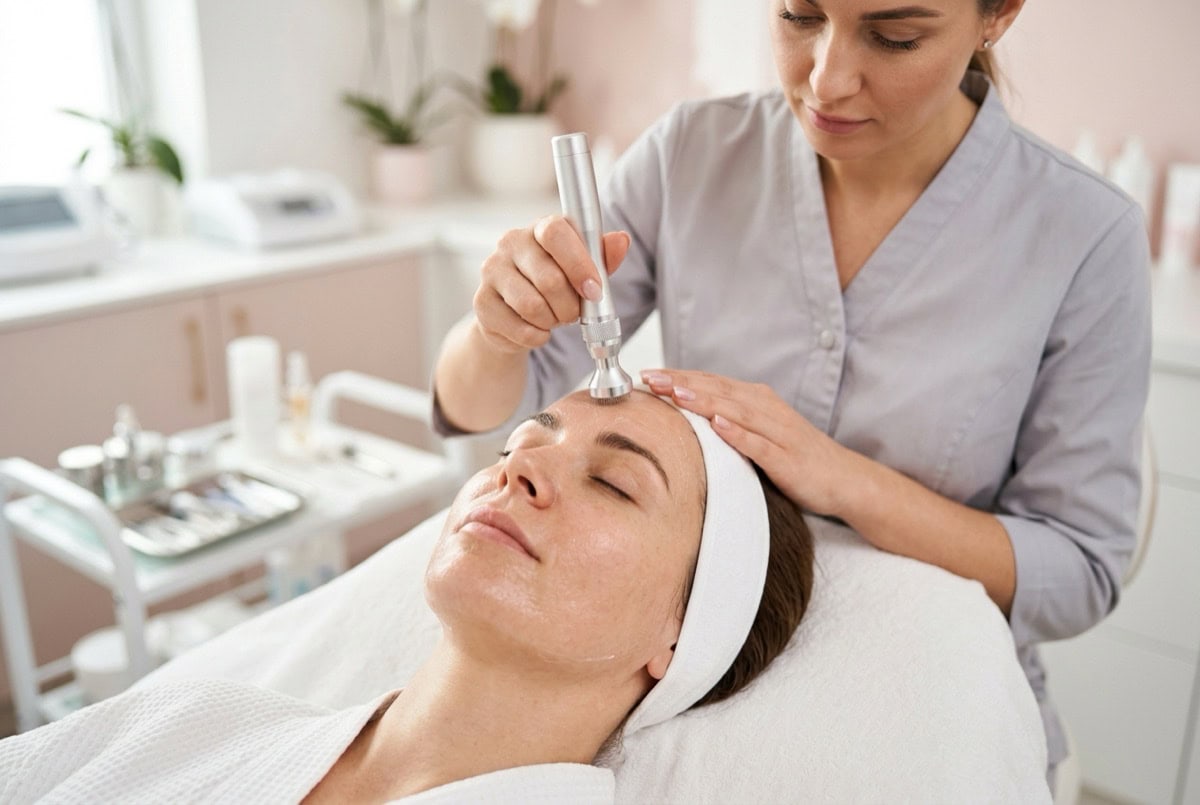
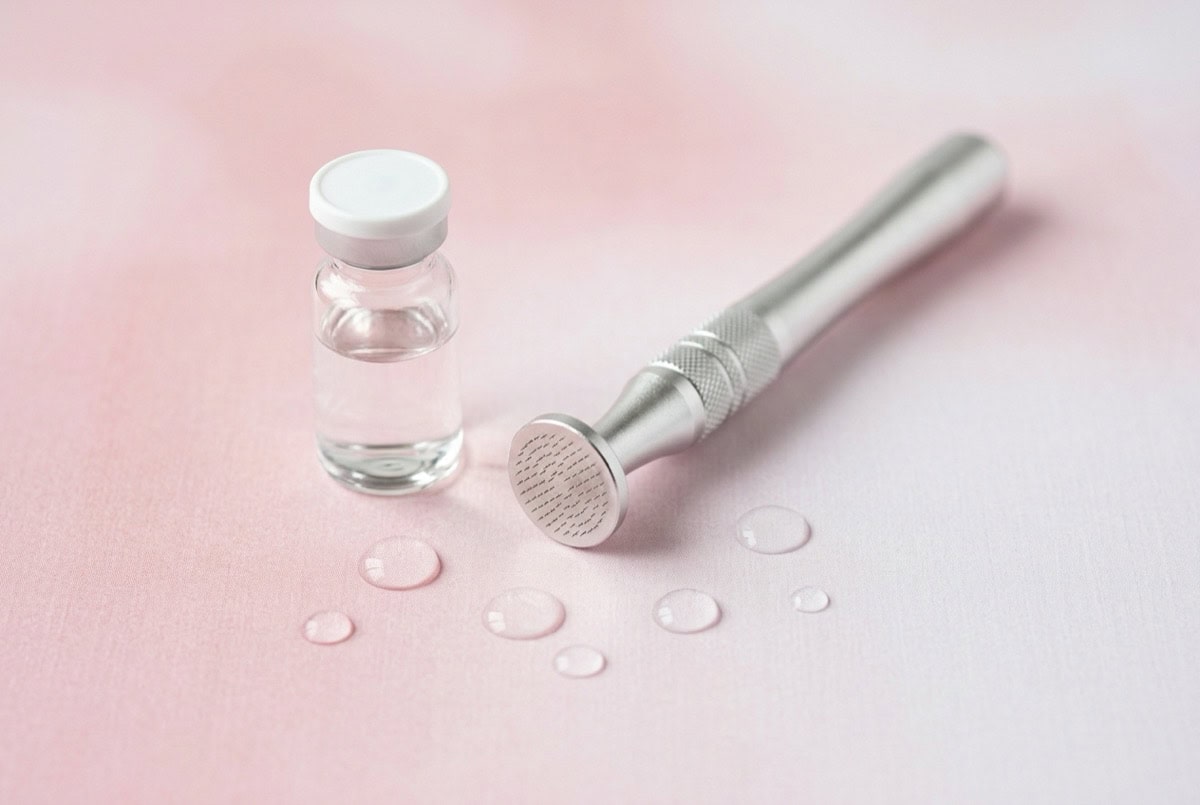
Microchanneling uses a stamp with a cluster of fine needles to make tiny, evenly spaced channels in your skin. Those channels trigger your skin to heal itself and build collagen. At the same time, a serum goes on top and sinks in through them.
So it does two jobs at once: it kicks off your skin’s repair response, and it delivers active ingredients deeper than a serum could reach on its own.
The name comes from those “channels.” It’s a close cousin of microneedling, just with a different tool and a slightly different technique.
How It Works
- Cleanse and numb. Your skin is cleaned and a numbing cream goes on.
- Serum goes on. The chosen serum is applied to the skin first.
- Stamping. The provider stamps the device across the area, pressing the serum in through the fresh channels.
- Finish. A calming serum or mask goes on to settle the skin.
The stamp is the key difference. A microneedling pen glides and vibrates across the skin. A microchanneling stamp presses straight down, so the channels are cleaner and more vertical. The idea is less surface tearing and better serum delivery, a bit like pairing microneedling with hyaluronic acid.
Microchanneling vs Microneedling
| Factor | Microchanneling | Microneedling |
|---|---|---|
| Tool | Stamp, pressed down | Pen, glides across |
| How the channels form | Straight down, cleaner | Angled as the pen moves |
| Serum delivery | Built into the process | Optional add-on |
| Surface damage | Less | Slightly more |
| Downtime | Usually shorter | 1 to 3 days |
| Depth range | Often shallower | Can go deeper |
| Best for | Glow, tone, serum delivery | Scars, deeper texture work |
| At home? | Rare, mostly in-clinic | Yes, shallow versions |
The honest truth: the two overlap a lot, and results are similar for most people. Microchanneling tends to mean less downtime and a stronger focus on getting serums in. Microneedling can go deeper, so it’s often the pick for acne scars and deeper texture work.
For a deeper side-by-side, see microchanneling vs microneedling.
Benefits
- Brighter, smoother, more even skin
- Better serum absorption than putting it on plain skin
- Softer fine lines over a series
- Less downtime than deeper treatments
- Gentler on the surface, so less redness for many people
- Works for tone, texture and general glow
Who It’s For
Microchanneling suits you if you want a glow-up with minimal downtime, or if the main goal is getting good serums to work harder. It’s a solid choice for dull skin, uneven tone and early aging.
It’s less suited to deep acne scars, where you usually want the extra depth of microneedling or the tightening of RF microneedling.
One caution: if you have melasma, any needling treatment can make pigment worse. Talk to your provider first.
Does It Hurt?
Not much. Numbing cream goes on first, and because microchanneling is often shallower than microneedling, most people find it very tolerable. You’ll feel pressure and a light scratchy sensation, not sharp pain.
How Much Does It Cost?
Microchanneling is priced much like standard microneedling. The serum used makes a big difference, since premium serums cost the clinic more.
- Serum quality is the biggest swing. Growth factor, specialty serums and exosome serums push the price up.
- Area treated and where you live both matter.
- A course is usually 3 to 6 sessions, often discounted as a package.
Price the full course, not one session. See our microneedling cost guide to compare.
Results And How Often
You’ll see a fresh glow within days as the skin recovers. The real change, better tone and texture, builds over weeks as collagen rebuilds. Most people judge results at around the 4 to 6 week mark.
A typical plan is 3 to 6 sessions, spaced about 4 weeks apart, then a maintenance session every few months. Take a photo before you start and along the way, since slow change is hard to spot in the mirror.
Aftercare is the same as microneedling: gentle products, mineral sunscreen daily, and no harsh actives for a few days. See our aftercare guide.
Is Microchanneling Worth It?
- Worth it if you want a low-downtime glow and better serum results for tone and texture.
- Pick microneedling instead if you’re treating deeper scars that need more depth.
- Pick RF microneedling if loose skin is the goal.
- Don’t overthink the name. A skilled provider matters more than whether they call it channeling or needling.
FAQ
What is the difference between microchanneling and microneedling?
Microchanneling uses a stamp pressed straight down, creating cleaner vertical channels and pushing serum in as part of the process. Microneedling uses a pen that glides across the skin and can go deeper. Microchanneling usually means less downtime; microneedling is often better for deeper scars.
Does microchanneling really work?
Yes, for tone, texture, glow and serum absorption. Like all collagen treatments, it works over a series rather than in one session, and results build over weeks. It’s less suited to deep scarring, where more depth helps.
How long do microchanneling results last?
After a full series, results can last several months. Collagen naturally declines over time, so most people book a maintenance session every few months to keep it up.
Is microchanneling painful?
Not very. Numbing cream is applied first, and because it’s often shallower than microneedling, most people tolerate it easily. Expect pressure and a light scratchy feeling, not sharp pain.
How often should you do microchanneling?
A typical plan is 3 to 6 sessions about 4 weeks apart, then maintenance every few months. Your provider sets the schedule based on what you’re treating.
Can you do microchanneling at home?
It’s mostly an in-clinic treatment. Home stamp tools exist but are shallow and easy to misuse. For a safe at-home option, see our at-home microneedling guide.
Summary
- Microchanneling uses a stamp to make clean channels and push serum in.
- It’s a close cousin of microneedling, with less downtime and a serum-delivery focus.
- Microneedling can go deeper, so it’s often better for scars.
- Best for glow, tone, texture and getting serums to work harder.
- Barely hurts, thanks to numbing and shallower depth.
- Plan on 3 to 6 sessions, then maintenance.
- Melasma is a reason to check with your provider first.
- The provider matters more than the name of the treatment.
This guide is for information, not medical advice. Discuss any treatment with a qualified provider who can assess your skin.

Kathy is a certified nutrition & health coach, long-time model, and lifelong skincare devotee. After years in the fashion industry, where your skin is your business card, she went deep on what actually works and founded ProNeedling. She tests the tools, treatments, and products we cover.