
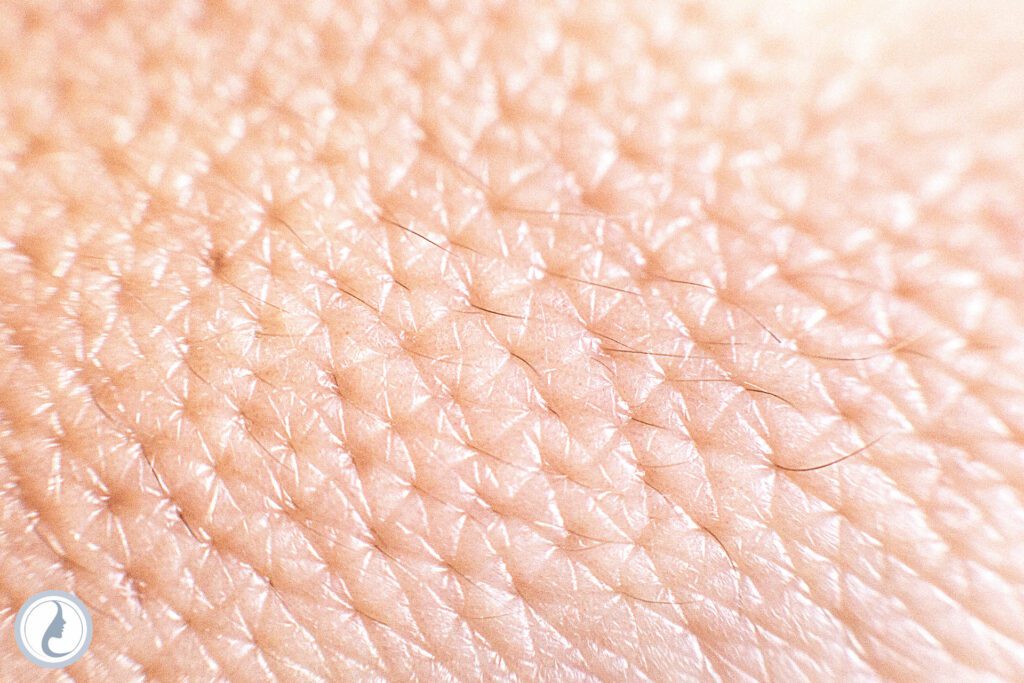
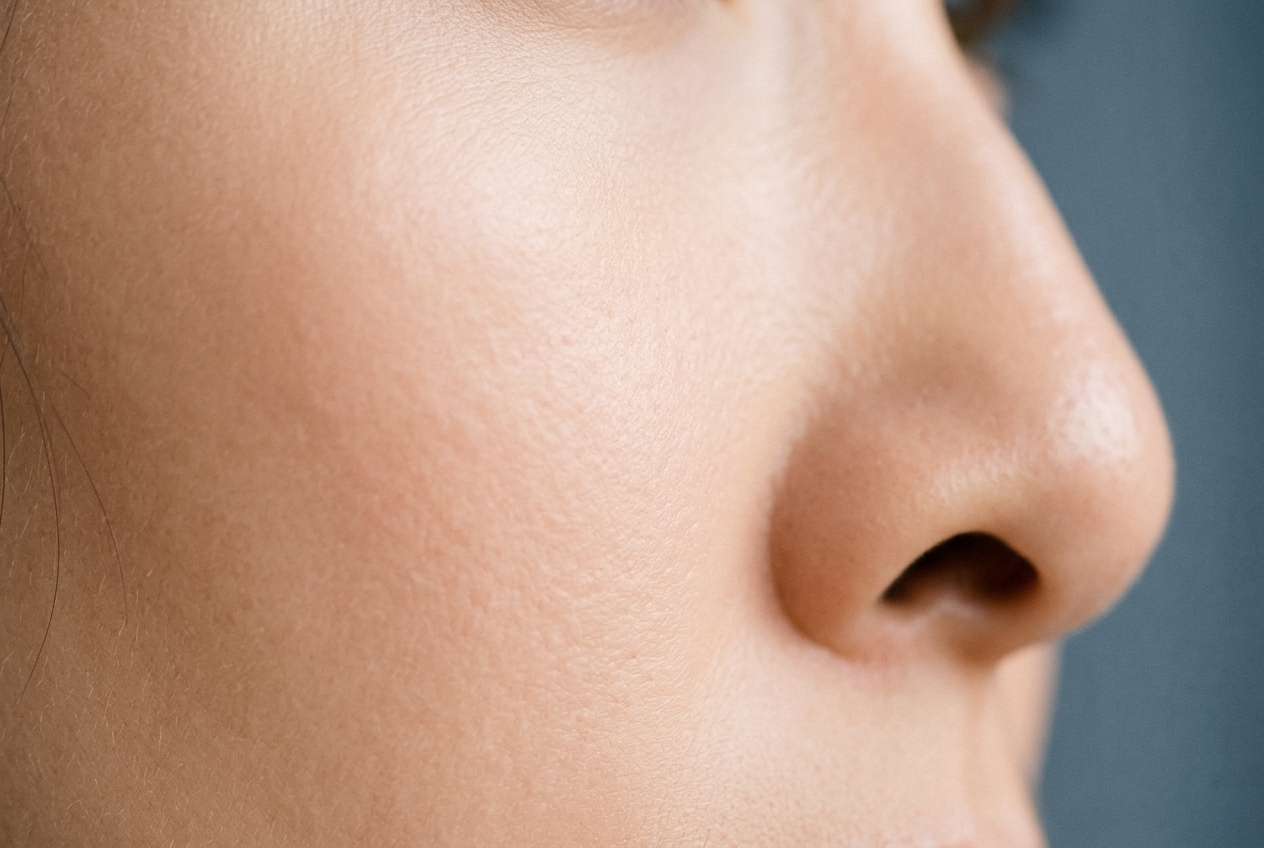
Microneedling won’t permanently shrink the physical opening of a pore, since pore size is largely genetic. But by boosting collagen around each pore, it can make enlarged pores look noticeably tighter and less visible.
In other words, the pore is still there. It just appears smaller because the skin around it becomes firmer, smoother, and better supported.
Does Microneedling Actually Shrink Pores?
Not in the literal sense. No treatment closes a pore for good, and anyone promising permanent shrinkage is overselling it.
What microneedling does is improve pore appearance. When collagen thickens the walls around a pore, the opening looks smaller and less obvious.
If you want the full background on the treatment itself, start with our guide to microneedling before diving into pores.
How Does Microneedling Affect Enlarged Pores?
Microneedling works on pores through a few connected mechanisms. Each one contributes to skin that looks smoother and more refined.
- Collagen boost: tiny micro-injuries trigger a wound-healing response that produces new collagen and elastin.
- Firmer pore walls: fresh collagen thickens the tissue around each pore, so the opening looks tighter.
- Exfoliation: the process helps clear dead skin cells and debris that can clog and stretch pores.
- Better product absorption: the micro-channels let your serums and actives penetrate deeper.
None of these permanently removes a pore. Together, though, they make enlarged pores far less noticeable.
Why Do Pores Look Larger in the First Place?
Pores tend to look bigger as your natural collagen levels decline with age. Less collagen means less support around each opening.
Other factors pile on and make the effect worse:
- Excess oil: sebum builds up and stretches the pore opening.
- Dead skin and dirt: buildup clogs pores and makes them more visible.
- Loss of elasticity: as skin loses firmness, pores lose their tight, round shape.
Microneedling targets the collagen side of that equation, which is why it helps pores look smaller.
How Does Collagen Induction Therapy Work?
Microneedling is often called collagen induction therapy. Fine sterile needles create controlled micro-injuries in the skin.
Your body treats these tiny channels as wounds and kicks off its natural repair process. That response produces more collagen and elastin.
As the skin rebuilds, the tissue around your pores becomes thicker and more supportive. The result is a smoother surface with less visible pores.
What Are the Benefits for Pores and Skin Texture?
Pore reduction is the headline, but the benefits reach further. Most people notice broad improvements in skin quality.
- Smoother texture: new skin cells replace dull, dead ones for a refined finish.
- Less visible pores: firmer surrounding skin tightens the look of each opening.
- More even tone: consistent collagen renewal supports a healthier, fresher complexion.
- Better absorption: your skincare works harder because ingredients reach deeper layers.
How Many Treatments Do You Need?
Results are highly individual and depend on your skin condition, lifestyle, and age. One session alone rarely delivers the full effect.
A commonly recommended course is 4 to 6 treatments, spaced about 4 to 6 weeks apart. That spacing gives collagen time to rebuild between sessions.
If you prefer to maintain results between professional visits, an at-home microneedling pen can be a gentler, lower-cost option.
How Do You Care for Skin After Microneedling?
Aftercare matters as much as the treatment. Your skin barrier is temporarily more sensitive, so treat it gently.
- Keep it clean: for the first 24 hours, skip makeup and any product not cleared by your provider.
- Moisturize often: counter the mild dryness that follows a session during the healing phase.
- Protect from sun: avoid direct sun for 48 hours, then use a broad-spectrum SPF daily.
Think of microneedling as a gradual process, not an overnight fix. Consistency and patience drive the best pore results.
Who Should Consider Microneedling for Pores?
Microneedling suits anyone wanting a non-invasive way to refine enlarged pores and improve overall skin texture.
It is less about erasing pores and more about healthier, smoother skin. With a steady routine and good aftercare, improvements build over time.
FAQ
Does microneedling permanently close pores?
No. Pores never close permanently. Microneedling makes them look smaller by firming the skin around each opening.
How soon will I see smaller-looking pores?
Many people notice a difference after the first session, but visible pore improvement usually builds over several treatments.
Does microneedling hurt?
Most people feel mild prickling or slight discomfort. A numbing cream is often used before professional sessions to keep it tolerable.
Can I do microneedling for pores at home?
Yes, with a proper device and clean technique. At-home tools are gentler than clinical treatments, so results come more gradually.
How often should I microneedle for pores?
Professional sessions are usually spaced 4 to 6 weeks apart. Always follow the guidance for your specific device or provider.
Is microneedling safe for all skin types?
It works for many skin types, but sensitive or acne-prone skin needs extra care. Check with a professional if you are unsure.

Kathy is a certified nutrition & health coach, long-time model, and lifelong skincare devotee. After years in the fashion industry, where your skin is your business card, she went deep on what actually works and founded ProNeedling. She tests the tools, treatments, and products we cover.