
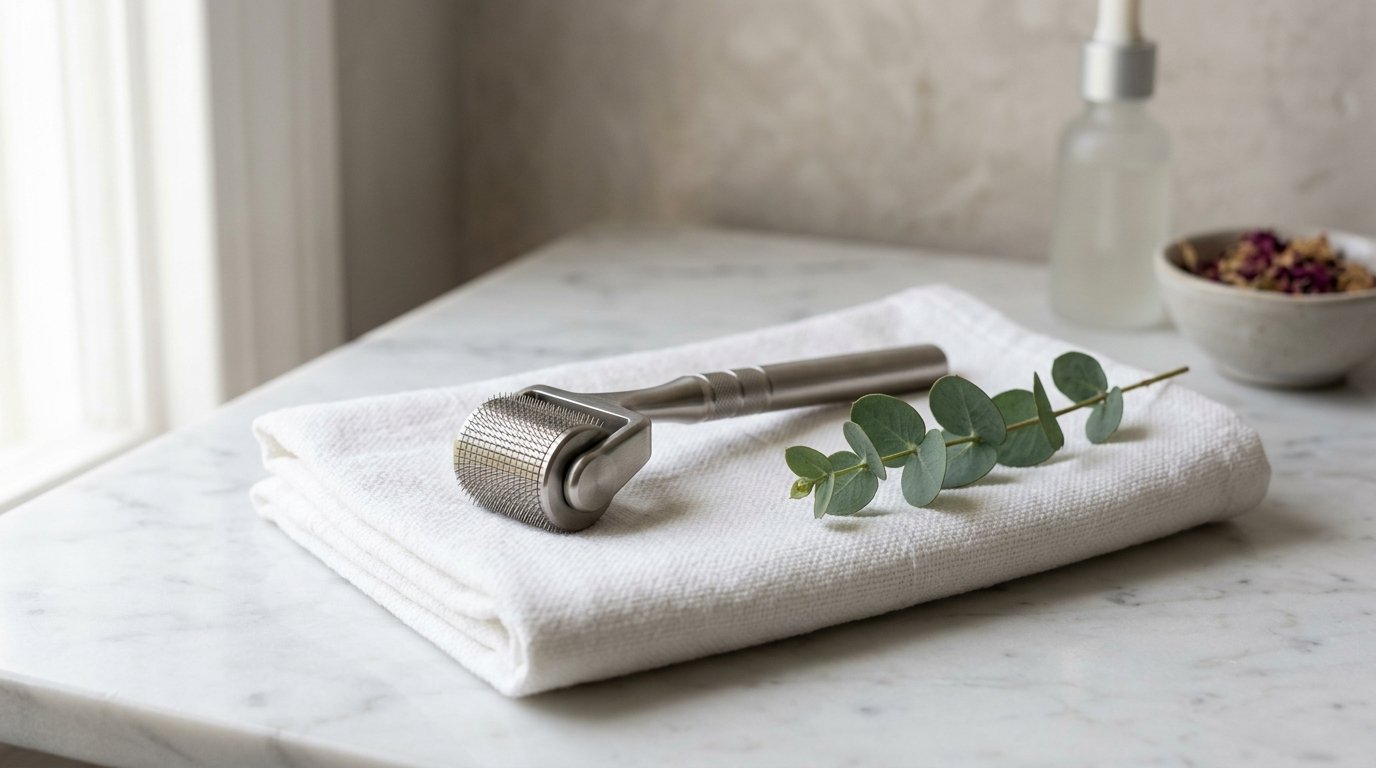
Dermarolling (collagen induction therapy with a derma roller) needs a clear consent that covers the collagen timeline, hygiene, and pigmentation risk. Below is a free dermarolling consent form template you can copy and adapt, plus the complete kit.
By the ProNeedling editorial team · Updated August 2026
What a dermarolling consent form must include
- The collagen timeline (new collagen forms over 12 to 16 weeks; a series is needed)
- Risks including hyperpigmentation (higher in deeper skin tones), herpes reactivation, infection
- Roller hygiene (sterile, single-client; home-roller cleaning)
- Alternatives and a no-guarantee statement
- Contraindications and signature + photo consent
Free dermarolling consent form template
Copy, print, or adapt the template below. For the editable version plus the other five forms, see the full kit.
Download the dermarolling consent form PDF
One page, print-ready, free. No email required.
Download the free consent form (PDF)
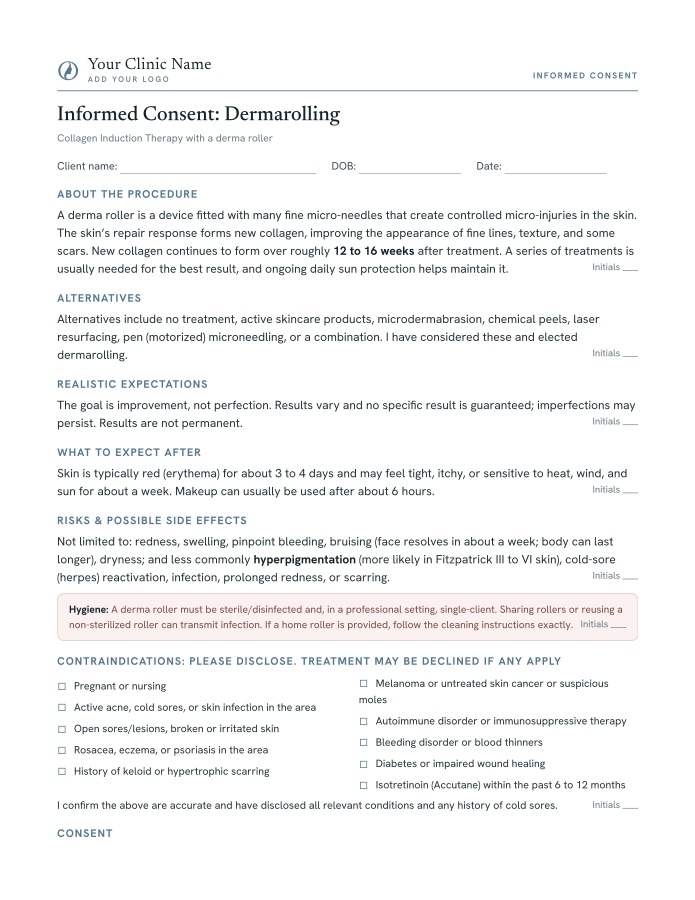
Informed Consent: Dermarolling
Client name: __________ DOB: ________ Date: ________
About the procedure. A derma roller with fine micro-needles creates controlled micro-injuries; the skin’s repair response builds new collagen over roughly 12 to 16 weeks, improving fine lines, texture, and some scars. A series is usually needed, with daily sun protection to maintain results.
Alternatives & expectations. Alternatives include no treatment, active skincare, microdermabrasion, peels, laser, or pen microneedling. The goal is improvement, not perfection; results vary and are not guaranteed.
What to expect / risks. Redness for about 3 to 4 days; possible bruising, and less commonly hyperpigmentation (more likely in Fitzpatrick IV to VI skin), cold-sore reactivation, infection, or scarring. A roller must be sterile and, in a professional setting, single-client.
Contraindications (may decline if any apply): pregnancy/nursing, active infection or cold sore, keloid history, isotretinoin within 6 months, blood thinners, autoimmune/immunosuppression, active acne in the area.
Consent. Risks, side effects, and alternatives have been explained; no guarantee is expressed or implied; elective and non-refundable. I have read and understand this form and consent to treatment. Valid until revoked in writing.
Client signature: __________ Date: ______ Provider/Witness: __________ Date: ______
Get the complete Dermarolling Documentation Kit
The free consent above is one of six. The full editable kit covers your whole workflow:
- Informed Consent
- Client Intake & Health History
- Pre-Treatment Care
- Aftercare sheet + card
- Treatment Record
- Photo Consent & Release
Editable in Canva, Word, and fillable PDF. Instant download.
Get the dermarolling kit, $9.95
Run more than one treatment? All 5 kits in the Suite, $39
Consent forms for other skin treatments
Each treatment needs its own paperwork: microneedling, RF microneedling & Morpheus8, exosome & PDRN, and PRP consent forms are free too, or get every kit in the Advanced Forms Suite. Rolling at home? See the at-home microneedling & derma rolling hub.
Frequently asked questions
What should a dermarolling consent form include?
The procedure and 12 to 16 week collagen timeline, risks (including hyperpigmentation and herpes reactivation), roller hygiene, alternatives, a no-guarantee statement, contraindications, and signature plus photo consent.
Is dermarolling consent different from microneedling?
They are closely related. Dermarolling uses a roller (often shallower) and the consent emphasizes roller hygiene and the collagen timeline, but the core risks and contraindications overlap heavily with pen microneedling.
Is there a printable PDF version of this dermarolling consent form?
Yes. Download the free one-page consent form as a print-ready PDF above, no email required. The full kit adds editable Canva, Word, and fillable PDF versions of all six documents.