
Stem cell microneedling pairs standard microneedling with a serum made from stem-cell-derived growth factors or exosomes, aiming to boost the skin’s own repair response. Does it work? The microneedling part has solid support, but the stem-cell serum evidence is still early and limited, so treat bold promises with caution.
What Is Stem Cell Microneedling?
It combines two things into a single treatment:
- Microneedling – fine needles create controlled micro-injuries that trigger your skin’s natural collagen response.
- Stem-cell-derived serums – topical products containing growth factors, proteins, or exosomes released by stem cells.
The theory is simple. The micro-channels made by the needles may help the serum reach deeper layers of skin.
The stem-cell ingredients can come from different sources, including plant-derived and human-derived cell lines. What matters is the mix of proteins and growth factors they carry, not the marketing label.
One thing to know upfront: most cosmetic “stem cell” products do not contain living stem cells. They use the signaling molecules those cells release. For the fundamentals, see what microneedling is and how it works.
Does Stem Cell Microneedling Actually Work?
Honest answer: the science is early and mixed.
Microneedling on its own has good evidence for improving skin texture, scars, and fine lines. That part is well established.
The stem-cell serum layer is where marketing tends to outpace proof. Studies exist, but many are small, short, or funded by product makers.
A few key uncertainties remain:
- Growth factors and exosomes are large molecules, so how much actually penetrates the skin is debated.
- Product quality, source, and concentration vary widely between brands.
- Large, long-term, independent trials are still lacking.
Exosome-based serums are the newer direction and get a lot of attention, but they are still being studied and are not a proven upgrade for everyone.
Bottom line: it may enhance microneedling, but no honest provider can promise dramatic results.
How Does the Treatment Work?
A typical session follows three simple steps:
- Microneedling – a device rolls or stamps fine needles across the skin to create micro-channels.
- Serum application – a stem-cell-derived serum or exosome solution is applied to the treated area.
- Healing – over the following weeks, the skin rebuilds collagen and can look smoother and more even.
Some providers use platelet-rich plasma (PRP), made from a small sample of your own blood, alongside or instead of a serum.
What Are the Potential Benefits?
Supporters and early studies point to possible improvements in:
- Skin texture and overall smoothness
- Fine lines and early signs of aging
- Acne scars and other types of scarring
- Uneven tone and mild hyperpigmentation
Keep perspective, though. Much of the proven benefit comes from the microneedling itself. The serum is a possible bonus, not a guarantee.
What Should You Expect During and After?
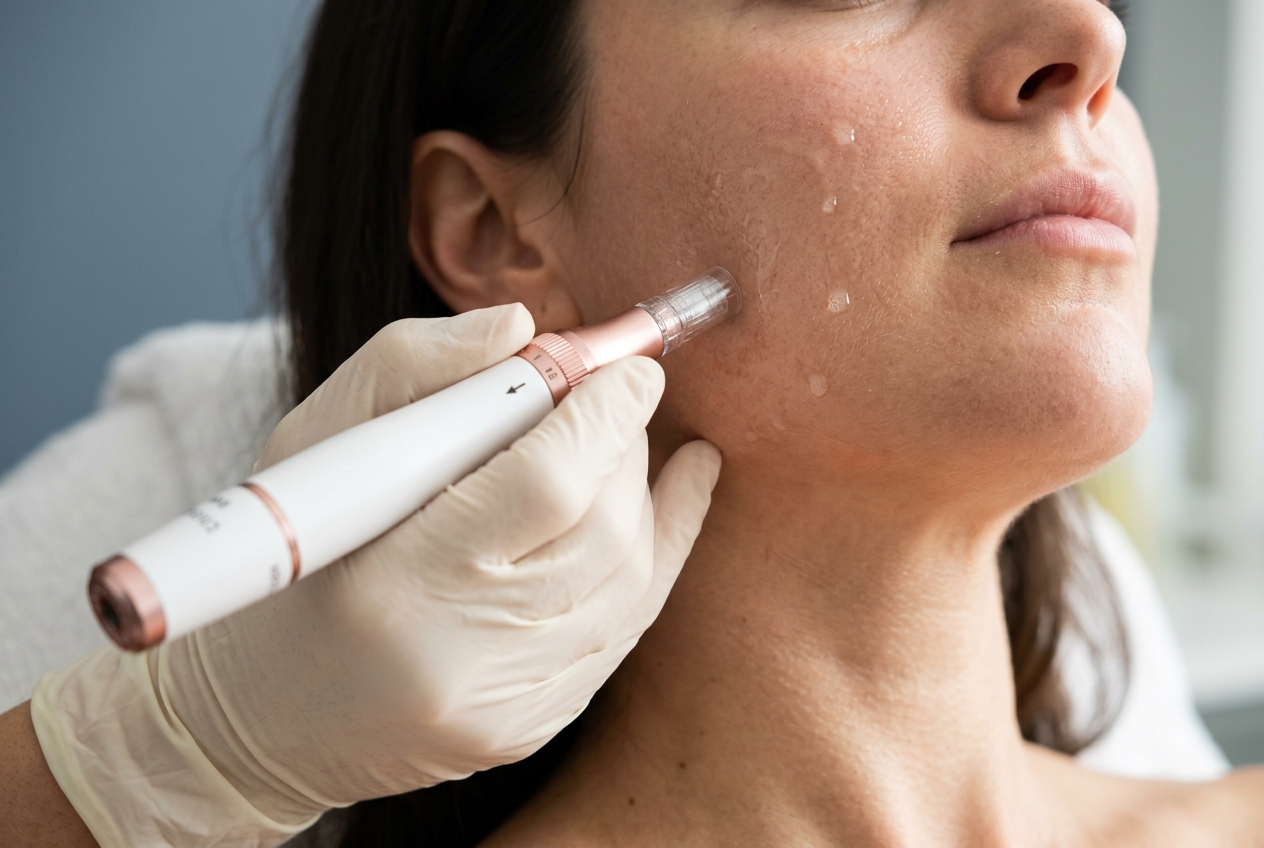
Sessions are usually quick and performed in a clinic.
- Before – your provider reviews your skin and cleanses the area, often applying a numbing cream.
- During – the needling itself usually takes around 20 to 30 minutes for the full face.
- After – redness and mild swelling are common and generally fade within a day or two.
Results build gradually as new collagen forms, typically over several weeks to a few months. Keeping skin hydrated supports recovery, and a gentle hyaluronic acid serum is a common post-treatment choice.
Is Stem Cell Microneedling Safe?
Microneedling itself is considered safe when performed by a trained, licensed provider using sterile equipment.
Common, temporary side effects include:
- Redness and mild swelling
- Short-term sensitivity or dryness
- Minor flaking as the skin heals
The bigger unknown is the serum. Because cosmetic stem-cell products are loosely regulated, quality and safety can differ from one brand or clinic to the next.
Always ask what is in the serum, where it comes from, and whether it is intended for topical use.
Frequently Asked Questions
Is stem cell microneedling FDA approved?
Some microneedling devices are FDA cleared, but most topical stem-cell serums are sold as cosmetics rather than approved drugs. Approval status varies by product.
Does stem cell microneedling use real stem cells?
Usually not. Most serums use growth factors, proteins, or exosomes derived from stem cells rather than living cells.
How many sessions do you need?
It depends on your goals and skin. Providers often suggest a series of treatments spaced a few weeks apart, followed by occasional maintenance.
How much does stem cell microneedling cost?
Prices vary widely by clinic, location, and protocol. Versions with exosomes or PRP usually cost more than basic microneedling, so ask your provider for a personalized quote.
Is it better than regular microneedling?
Possibly, but it is not proven. The core benefits come from microneedling, and the serum may add value, though strong independent evidence is still limited.
Who should avoid stem cell microneedling?
People with active acne, skin infections, certain skin conditions, or who are pregnant should check with a professional first. It is not right for everyone.
Exosomes vs PRP with microneedling, which is better?
Many practitioners now lean toward exosomes over PRP. PRP mainly speeds healing, while exosomes, peptides and growth-factor or stem-cell secretum serums appear to drive stronger regeneration. The pricier add-on isn’t automatically worth it, ask your provider what the serum actually contains and why it was chosen, not just whether it is labeled “stem cell.”
What are polynucleotides or PDRN?
PDRN and polynucleotides are a newer repair ingredient sometimes paired with microneedling. They are less established than exosomes, so treat dramatic claims with caution and ask about your provider’s training with them.

Kathy is a certified nutrition & health coach, long-time model, and lifelong skincare devotee. After years in the fashion industry, where your skin is your business card, she went deep on what actually works and founded ProNeedling. She tests the tools, treatments, and products we cover.